Orange County Personal Injury Lawyer
- Free Consultation
- No Fee Unless We Win
- Serving Orange County & Southern California
Start Your Free Case Review
Tell us what happened — no cost, no obligation.
- 100% confidential. Your details are safe and shared with no one
Recent Client Results
Tens of Millions Recovered for Our Clients
Recent Recoveries Secured for Injured Clients.
Last updated: October 2026 · Reviewed by Faud Haghighi, Esq., Founder & Lead Trial Attorney
How Can an Orange County Personal Injury Lawyer Help?
A personal injury lawyer proves who caused your injury, finds every insurance policy that can pay, meets the California deadlines that can end a claim, and pursues full compensation for your medical bills, lost income, and pain and suffering.
The Law Offices of Faud Haghighi is based in Orange County, with offices in Aliso Viejo and Tustin, and represents injured people throughout Southern California, including Los Angeles, Riverside, and San Diego Counties. Attorney Faud Haghighi focuses on difficult, high-stakes cases: disputed liability, complex causation, multiple defendants, and serious injuries. He handles each case personally, from the first call through settlement or trial.
What Should You Do After an Accident in Orange County?
Get medical care first, then protect the evidence: report the accident, photograph the scene, identify witnesses, and avoid recorded statements to an insurer until you understand your rights. The first days after an accident often decide what can be proven later.
- Get medical care. Call 911 for serious injuries. See a doctor even if you feel okay; concussions and soft-tissue injuries often appear days later, and prompt records connect the injury to the accident.
- Report it. Call the police after a crash: CHP on the freeways, the local police department on city streets. For a fall, ask the store or property manager for a written incident report.
- Exchange information. Names, phone numbers, driver’s license, license plate, and insurance details of everyone involved.
- Photograph everything. Vehicles, the intersection, skid marks, the hazard that caused a fall, and your injuries, before anything is repaired or cleaned up.
- Identify witnesses. Get names and numbers before people leave. Note nearby businesses with cameras; most surveillance systems record over footage within days or weeks.
- Preserve evidence. Keep damaged property, shoes, and clothing as they are. Save dashcam video and photos in more than one place.
- Notify your own insurer as your policy requires, but keep it to the basic facts.
- Avoid recorded statements to the other side’s insurer before you understand your rights. Adjusters use those statements to dispute fault and injuries.
- Keep records. Medical bills, receipts, mileage to appointments, and days missed from work.
- Talk to a lawyer if you were seriously injured, fault is disputed, or a public agency may be involved. Some deadlines are far shorter than two years: a hit-and-run generally must be reported to the police within 24 hours to protect uninsured motorist coverage, and claims against public agencies generally require a written claim within six months.
What Personal Injury Cases Do We Handle?
We handle serious injury claims of every major type. Each one turns on different evidence and different rules:
Car Accidents
Most car accident claims are paid by the at-fault driver’s liability insurance, but serious injuries often require looking further: your own uninsured/underinsured motorist coverage, an employer if the driver was working, or a public agency if a road defect contributed. We handle:
- Rear-end and intersection collisions, including left-turn and red-light crashes
- Distracted and drunk drivers; in some drunk-driving cases, a jury may also award punitive damages (Civ. Code §3294)
- Uninsured and underinsured drivers, and hit-and-run crashes (covered by your own UM policy in many cases)
- Rideshare (Uber/Lyft) crashes, where California requires $1 million in liability coverage from the time a driver accepts a ride until the passenger exits (Pub. Util. Code §5433)
- Freeway and multi-vehicle crashes, where fault is often split among several drivers
More on our Orange County car accident page, including California’s minimum insurance limits and who pays after a crash.
Truck and Commercial Vehicle Accidents
Big-rig and commercial vehicle cases involve federal rules on driver hours, maintenance, and qualifications, and the responsible parties often include the trucking company, a maintenance contractor, or a cargo loader as well as the driver. Driver logs and electronic control-module data can be overwritten quickly, so we send preservation demands at the start of the case.
Motorcycle Accidents
Riders are often blamed by default. Lane splitting is legal in California, and riding lawfully does not make a rider at fault. We use the collision report, witness accounts, and when needed an accident reconstruction to show what actually happened, because motorcycle injuries are usually severe and fault is usually disputed.
Pedestrian and Bicycle Accidents
Drivers must yield to pedestrians in marked and unmarked crosswalks (Veh. Code §21950), and must give cyclists at least three feet when passing (Veh. Code §21760). When there is nothing between a person and a vehicle, even a low-speed impact can cause life-changing harm. We pursue the driver’s insurance and, where it applies, the injured person’s own uninsured motorist coverage.
Slip and Fall and Premises Liability
Property owners and businesses must keep their property reasonably safe and warn about hazards they know of or should have found. These cases turn on notice: how long the hazard existed and whether a reasonable inspection would have caught it. See our slip and fall and premises liability pages, and our guide to proving notice of a dangerous condition.
Dangerous Conditions of Public Property
Cities, counties, and other public agencies can be responsible for injuries caused by broken sidewalks, road defects, missing signs, and unsafe public facilities, but the claim rules are stricter and the deadline is much shorter (see below). More on our Dangerous Conditions of Public Property page.
Product Liability
When a defective product causes an injury, the manufacturer, distributor, and retailer can be held responsible, often without proof of negligence under California’s strict-liability rules. The product itself is the key evidence, so keep it unaltered. More on our product liability page.
Catastrophic Injuries
Brain injuries, spinal cord injuries and paralysis, amputations, and severe burns require proving the lifetime cost of care, usually with a life-care planner and an economist. More on our catastrophic injury page.
Wrongful Death
When negligence causes a death, close family members, such as a spouse, domestic partner, or children, may bring a wrongful death claim (Code Civ. Proc. §377.60) for lost financial support, funeral expenses, and the loss of love and companionship. The deadline is generally two years.
Third-Party Workplace Injuries and Dog Bites
Workers’ compensation usually limits claims against your own employer, but if someone else, such as a subcontractor, equipment maker, or property owner, contributed to an on-the-job injury, you may have a separate injury claim against them. In dog bite cases, California holds a dog’s owner responsible for a bite in a public place or on private property where the victim was lawfully present, even if the dog had never bitten before (Civ. Code §3342).
Why Are Orange County Accident Cases Complicated?
Orange County’s traffic, development, and mix of public and private property create recurring problems that affect how a claim is proven and who can be held responsible.
- Freeway pile-ups. Stop-and-go traffic on the I-5, the 405, the 55, and the 91 produces chain-reaction crashes where several drivers may share fault, so the order of impacts has to be reconstructed.
- Toll roads. High speeds on the 73, 133, 241, and 261 make crashes more severe, and a road-condition issue can bring a public agency into the case.
- Rideshare traffic. Pickups and drop-offs around John Wayne Airport, the Irvine Spectrum, and the coast mean rideshare crashes are common, and which insurance applies depends on what the app showed at the moment of the crash.
- Busy commercial areas. Large shopping centers and parking structures see heavy foot traffic, so pedestrian and parking-lot injuries are frequent, and lease terms and who actually controlled the area help decide whether the store or the property owner is responsible.
- Coastal traffic. Pacific Coast Highway mixes tourists, cyclists, and pedestrians on a high-speed road.
- Public property. Many injuries happen on city sidewalks, county roads, and transit property, which triggers the six-month government claim rule.
What California Laws Affect Your Injury Claim?
Comparative Negligence
California follows pure comparative negligence: if you were partly at fault, your compensation is reduced by your percentage of fault, but you can still recover. The rule comes from the California Supreme Court’s decision in Li v. Yellow Cab Co. (1975). If your damages total $100,000 and a jury finds you 20% responsible, you recover $80,000. Even if you were mostly at fault, you can still recover the share caused by others. That is why insurers argue so hard about fault: every percentage point they shift to you lowers what they pay.
Statute of Limitations
Most California personal injury lawsuits must be filed within two years of the injury (Code of Civil Procedure §335.1), but claims against government agencies require a written claim within six months. If you miss the deadline that applies to you, the court can dismiss the case permanently, no matter how strong it was.
| Situation | Deadline | Law |
|---|---|---|
| Personal injury lawsuit | 2 years from the injury | CCP §335.1 |
| Wrongful death lawsuit | 2 years from the death | CCP §335.1 |
| Vehicle or other property damage | 3 years | CCP §338 |
| Injury claim against a public entity | Written claim within 6 months | Gov. Code §911.2 |
| Missed the 6-month government claim deadline | Late-claim application, no more than 1 year from the injury | Gov. Code §911.4 |
| Lawsuit after a government claim is rejected | 6 months from the written rejection (2 years from the injury if no written notice was given) | Gov. Code §945.6 |
| Injured child, private defendant | The 2 years generally do not run until age 18 | CCP §352 |
The practical lesson: evidence and deadlines both run out. Even when two years seems like plenty of time, witnesses move, footage is deleted, and a public agency may be involved without you realizing it. A prompt legal review protects both.
Claims Against Cities, Counties, and Other Public Agencies
Before you can sue a public agency in California, you must first present a written claim to that agency, generally within six months of the injury. This applies to injuries from broken sidewalks, potholes and road defects, missing or malfunctioning traffic signals, unsafe parks and public buildings, and vehicles owned by a city, the county, OCTA, or a school district.
- What must be shown. Under Government Code §835, the property was in a dangerous condition, the condition caused a reasonably foreseeable kind of injury, and either a public employee’s negligence created it or the agency knew or should have known about it in time to fix it. Minor defects that a reasonable person would not consider dangerous are generally not enough (§830.2).
- What the claim must include. Your name and address, the date and place of the incident, how it happened, a general description of the injury, the names of any public employees involved if known, and the amount claimed (or, if over $10,000, no dollar amount but whether it would be a limited civil case) (Gov. Code §910).
- What happens next. The agency generally has 45 days to act; if it does not act, the claim is treated as rejected, and the deadline to sue is generally two years from the injury. If it rejects the claim in writing, you usually have six months from that notice to file a lawsuit.
Our $400,000 recovery for a slip and fall on public property in Anaheim is one example of this kind of case. Results depend on the facts of each case and will differ if based on different facts.
Injuries to Children
For claims against private parties, the two-year clock generally does not run while the injured person is under 18. That pause does not apply to government claims, so a child’s claim against a public agency still needs prompt action, although a late-claim application may be available for minors (Gov. Code §911.6). Any settlement of a child’s claim must be approved by the court (Code Civ. Proc. §372; Cal. Rules of Court, rule 7.950).
What Compensation Can You Recover?
Depending on the facts and the evidence, compensation in a California personal injury case may include:
- Past medical expenses: emergency care, hospital stays, surgery, therapy, and medication
- Future medical treatment, including surgeries, therapy, and care your doctors expect you to need
- Lost wages for time missed from work
- Loss of future earning capacity if the injury limits the work you can do
- Property damage, such as vehicle repair or replacement
- Physical pain and suffering
- Emotional distress, including anxiety and sleep problems caused by the injury
- Loss of enjoyment of life
- Permanent disability and disfigurement
- Loss of consortium for a spouse or partner
- Punitive damages in rare cases of malicious or reckless conduct, such as some drunk-driving crashes
Under California’s Howell rule, past medical expenses are generally measured by the amount actually paid or owed, not the full amount billed. Which damages apply, and how much, depends on the evidence in each case.
How Much Is My Orange County Personal Injury Case Worth?
No honest lawyer can value a case before reviewing it. The value depends on specific factors, and the same type of accident can produce very different results. The factors that matter most:
- Severity of the injury. A fracture that needs surgery is valued very differently from a strain that heals in weeks.
- Length of treatment and whether it was consistent; gaps in treatment are used to argue an injury was minor (see why treatment gaps hurt a case).
- Permanent impairment and the long-term outlook from your doctors.
- Lost income and any effect on future earning ability.
- How clearly fault can be proven, and any share of fault assigned to you.
- Available insurance, including the at-fault party’s policy, your own coverage, and any other responsible parties.
- Quality of the evidence: records, photos, witnesses, and expert support.
Read more in our guide to what affects the value of a personal injury case in California. Results depend on the facts of each case and will differ if based on different facts.
How Does an Orange County Personal Injury Lawyer Build Your Case?
“Preparing a case for trial” means doing specific work early, while the evidence still exists. In practice, that means:
- Surveillance footage. We send written preservation demands to stores, businesses, and property owners right away, because many systems record over footage within days or weeks.
- Vehicle data. In serious crashes, we preserve event data recorder (black box) information, and in truck cases, driver logs and electronic logging data.
- Witnesses. We contact witnesses while their memories are fresh and document their accounts in writing.
- Public records. We obtain the traffic collision report, 911 recordings, and maintenance and complaint records when a public agency is involved.
- Medical records. We gather your complete records and bills, and work with your treating doctors so the records clearly connect your injuries to the accident (see what medical records help prove a claim).
- Experts when they are needed. When fault is disputed, an accident reconstruction expert can show speeds, angles, and sequence of impacts. In serious injury cases, a life-care planner and an economist project future costs (see why expert witnesses matter).
- Every insurance policy. We identify all coverage that may apply, such as the at-fault party’s policy, an employer’s policy, umbrella coverage, and your own uninsured/underinsured motorist coverage, because the first policy is often not enough for a serious injury.
- Dealing with insurers. We handle all contact with adjusters, so nothing you say is used to dispute fault or minimize your injuries (see the insurance adjuster’s role).
If the insurer will not pay fair value, we file suit in the Orange County Superior Court, where injury cases are generally heard at the Central Justice Center in Santa Ana, and the case moves into discovery. Learn more about when a demand letter becomes a lawsuit and what to expect at the Orange County Superior Court.
Why Choose Faud Haghighi as Your Orange County Personal Injury Lawyer?
You work directly with your attorney. Faud Haghighi personally handles each case, focuses on contested-liability and serious-injury claims, and prepares every case so it can go to trial if the insurer won’t pay fair value. Many clients come to the firm through referrals from other attorneys, particularly in disputed-liability, multi-party, and complex-causation cases.
Meet Faud Haghighi, Esq.
Faud Haghighi is a personal injury and civil litigation attorney whose practice is centered on difficult, high-stakes cases. He has handled hundreds of cases involving auto collisions, premises liability, product liability, general negligence, bicycle and pedestrian accidents, and claims against cities for dangerous conditions of public property, from initial investigation through jury verdict, and has resolved cases totaling tens of millions of dollars in settlements and verdicts. He began his career at the Law Offices of Thomas W. Gillen, advancing from law clerk to associate attorney and litigating complex, high-asset matters, including trials and contested evidentiary hearings.
- Admitted to the State Bar of California in 2012
- Admitted to the U.S. District Court for the Central District of California and the U.S. Court of Appeals for the Ninth Circuit
- Appears pro hac vice in Nevada
- J.D., Whittier Law School, with a certification in Business Law; B.A., Psychology, University of California, San Diego
Read Faud Haghighi’s full attorney biography →
Where Are Our Offices, and Which Communities Do We Serve?
We have two Orange County offices and represent injured people throughout Orange County and Southern California, including Los Angeles, Riverside, and San Diego Counties. Consultations are free.
- Aliso Viejo office: 120 Vantis, Suite 300, Aliso Viejo, CA 92656. Convenient for South Orange County, including Aliso Viejo, Mission Viejo, Laguna Niguel, Laguna Hills, and Lake Forest.
- Tustin office: 1352 Irvine Blvd #204, Tustin, CA 92780. Convenient for Central Orange County, including Tustin, Irvine, Santa Ana, and Orange.
City pages:
- Central Orange County: Santa Ana, Tustin, Irvine
- South Orange County: Aliso Viejo, Mission Viejo, Laguna Niguel, Lake Forest, Laguna Hills
- Coastal and North Orange County: Newport Beach, Huntington Beach, Costa Mesa, Anaheim
Injured in Orange County or anywhere in Southern California? A free, confidential case review can tell you which deadlines apply and what evidence to protect now. There is no attorney fee unless we recover for you. Call (949) 313-7656 or request a free consultation.
Free Case Review
Speak directly with an attorney about your injury — at no cost.
(949) 313-7656 Request a ConsultationNo attorney fee unless we recover for you. If there is no recovery, you may still be responsible for case costs.
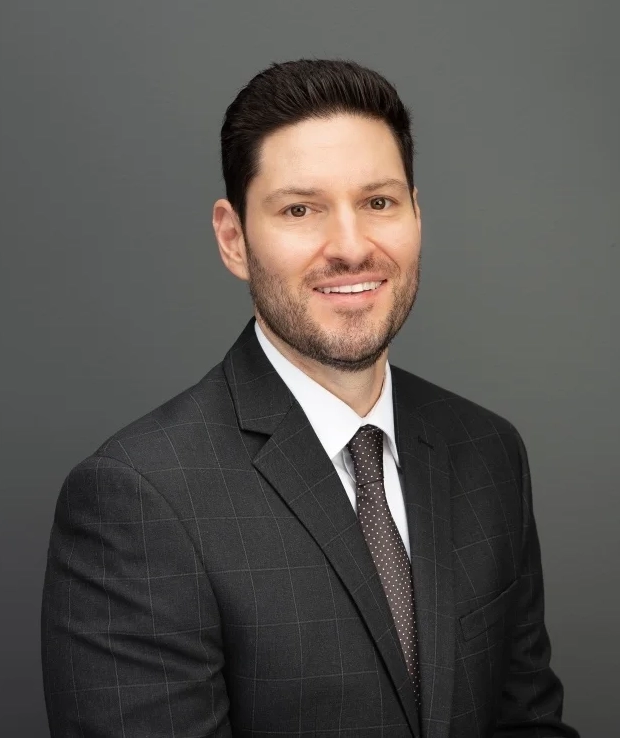
Faud Haghighi, Esq.
Founder & Lead Trial Attorney
An Orange County trial attorney representing people injured by someone else's negligence — in car and truck crashes, slip-and-falls, premises accidents, and other serious-injury cases. Faud builds each case with the right medical and liability experts, preserves the evidence early, and prepares every file for trial — and you work directly with him, start to finish.
CA State Bar since 2012 · Aliso Viejo & Tustin
Free Consultation Read full bio ›Personal Injury Services
Contact Our Legal Team
Speak directly with an experienced attorney at the Law Offices of Faud Haghighi. We're here to help you understand your rights and explore your legal options.
- (949) 313-7656
- info@fhaghighilaw.com
- 120 Vantis, Ste. 300
Aliso Viejo, CA 92656 - 1352 Irvine Blvd., Ste. 204
Tustin, CA 92780
Orange County Personal Injury FAQs
You likely have a claim if someone else’s carelessness caused your injury, for example a driver who ran a red light, a business that ignored a spill, or a company that sold a defective product. California law requires everyone to use reasonable care (Civil Code §1714). A claim needs proof that the other party was careless, that the carelessness caused your injury, and that you suffered real losses.
Generally two years from the date of injury (Code of Civil Procedure §335.1). Claims against a city, county, or other public agency are much shorter: a written claim is generally due within six months (Government Code §911.2). Property damage claims generally have three years (CCP §338).
Often, for claims against private parties: under Code of Civil Procedure §352, the two-year deadline generally does not run until the child turns 18. Claims against government agencies get no such extension, and any settlement of a child’s claim must be approved by the court.
You generally must file a written claim with the agency within six months (Government Code §911.2) before you can sue. If the claim is rejected in writing, you usually have six months from that notice to file a lawsuit (Government Code §945.6). Learn more on our Dangerous Conditions of Public Property page.
Get medical care, even if your injuries seem minor. Then report the accident, photograph the scene and your injuries, and get witness names and numbers. Avoid discussing fault or giving a recorded statement to the other side’s insurer before you understand your rights.
You can still recover. California follows pure comparative negligence, so your compensation is reduced by your share of fault. For example, a person with $40,000 in losses who is found 25% at fault still recovers $30,000. We work to keep insurers from overstating your share of fault.
Be careful. The adjuster works for the insurance company, and a recorded statement can be used to dispute fault or downplay your injuries. You can give basic information, but it is wise to speak with a lawyer before giving a recorded statement or signing anything. Read more about the insurance adjuster’s role.
Depending on the evidence, compensation can include past and future medical expenses, lost wages, loss of future earning capacity, property damage, pain and suffering, emotional distress, and loss of enjoyment of life. Punitive damages are available only in rare cases of malicious or reckless conduct.
Not in most cases. California caps non-economic damages such as pain and suffering only in medical malpractice cases (Civ. Code §3333.2). In car accident cases, an injured person who was driving uninsured, or who was convicted of DUI for that crash, generally cannot recover pain and suffering damages (Civ. Code §3333.4).
It depends on the severity of your injury, the length and cost of treatment, any permanent impairment, lost income, how clearly fault can be proven, and the insurance available. No one can give an honest number before reviewing the facts. See what affects the value of a personal injury case.
Nothing up front. We work on a contingency fee basis: there is no attorney fee unless we recover compensation for you, and your consultation is free. If there is no recovery, you owe no attorney fee, but you may still be responsible for case costs, as explained in your fee agreement. Read more about the cost to hire a personal injury lawyer in California.
Not always. Many claims resolve through a demand and negotiation with the insurer. A lawsuit is filed when the insurer will not pay fair value or when a deadline is approaching. Read more: do you have to file a lawsuit in a personal injury case?
It depends on your recovery time, the complexity of the case, and whether the insurer negotiates in good faith. Some cases settle within months; cases with serious injuries or multiple defendants can take a year or more. We focus on a fair result rather than a fast one. See why a personal injury case can take time.
If the insurer won’t make a reasonable offer, we file suit and prepare the case for trial. Building each claim as if it will go before a jury strengthens your position and often leads to better settlement offers before trial.
Yes. Our offices are in Aliso Viejo and Tustin, and we represent injured people throughout Southern California, including Los Angeles, Riverside, and San Diego Counties.
You work directly with attorney Faud Haghighi, who has practiced law in California since 2012 and focuses on contested-liability and serious-injury cases. He has resolved cases totaling tens of millions of dollars in settlements and verdicts, and he prepares every case so it can go to trial. Results depend on the facts of each case and will differ if based on different facts.
Client Reviews
What Our Clients Say
 Posted on Google

 Angelica Mejia
Trustindex verifies that the original source of the review is Google.
I had the best experience working with Mr. Haghighi. He always demonstrated a high level of professionalism and expertise while handing my case. I always felt very comfortable when communicating with him and I knew that I could trust him 100%. I highly recommend Mr. Haghighi for his knowledge, exceptional service, honesty, and dedication.Posted on Google jess francoI am writing to highly recommend Faud Haghighi for his outstanding professionalism, legal knowledge, and unwavering support. Throughout my experience working with him, Faud Haghighi consistently demonstrated a high level of competence, integrity, and dedication to his clients. Faud Haghighi is exceptionally knowledgeable in his field and took the time to clearly explain legal processes, options, and potential outcomes in a way that was easy to understand. His attention to detail and strategic approach provided confidence at every stage of the matter. He was always well-prepared, responsive, and thorough, ensuring that no question or concern went unaddressed. Beyond his technical expertise, Faud Haghighi stands out for his professionalism and supportive demeanor. He was approachable, patient, and genuinely invested in achieving the best possible outcome. His calm and reassuring presence made what could have been a stressful situation far more manageable. I would not hesitate to recommend Faud Haghighi to anyone seeking a skilled, reliable, and compassionate attorney. He is a true professional and an asset to the legal community.Posted on Google
 sara ezatiGreat experience working with this office. Very professional, responsive, and easy to work with. I truly appreciate all their help and would highly recommend them.Posted on Google
 Silvia FavelaI cannot recommend Faud highly enough. He assisted us after my son was stuck by an unlicensed driver in an unregistered and uninsured vehicle while riding his bike. This was an incredibly complex and stressful situation, but Faud’s professionalism and expertise were evident from day one. He handled all the difficult communication with my insurance company, ensuring my son was protected and that we weren’t taken advantage of. If you need a dedicated attorney who truly knows how to navigate the tough cases, Faud is the one to call.

6 Steps Process
How We Handle Your Orange County Injury Case
From your first call to the final resolution, here’s what working with the Law Offices of Faud Haghighi looks like — a clear, six-step path built to take the pressure off you and pursue the full recovery you’re owed. There’s no attorney fee unless we win.
Free Consultation
It starts with a free, confidential conversation. You tell us what happened, we listen, and we explain your options in plain language — no cost and no pressure.
Case Evaluation
We assess who's at fault, review your injuries and losses, and map out the strongest path to compensation for your specific situation.
Investigation
We move fast to lock down the proof — police reports, witness statements, photos, surveillance footage, and expert opinions — before any of it disappears.
Claim Filing
We prepare and file every document, deal with the insurers directly, and make sure no deadline slips by while you focus on healing.
Negotiation
We press the insurance companies hard, backed by solid evidence, to secure the full and fair settlement you're owed — not the quick discount they'd prefer.
Resolution or Trial
Many cases settle here. If the offer isn't fair, we're ready to take your case to an Orange County courtroom and present it to a jury.
Free Case Evaluation
Tell Us What Happened
Phone
(949) 313-7656
info@fhaghighilaw.com
Aliso Viejo Office
120 Vantis, Ste. 300, Aliso Viejo, CA 92656
Tustin Office
1352 Irvine Blvd #204, Tustin, CA 92780
Get Your Free Case Review
Submitting this form does not create an attorney-client relationship. Please do not include confidential or time-sensitive information.