Orange County Premises Liability Lawyer
Often, yes. When an owner fails to fix or warn about a hazard they knew about or should have found, California law lets injured victims recover medical bills, lost wages, and pain and suffering. We hold negligent owners accountable throughout Orange County and Southern California, with no attorney fee unless we recover for you.
- Free Consultation
- No Fee Unless We Win
- Serving Orange County & Southern California
Start Your Free Case Review
Tell us what happened — no cost, no obligation.
- 100% confidential. Your details are safe and shared with no one
Recent Client Results
Tens of Millions Recovered for Our Clients
Recent Recoveries Secured for Injured Clients.
Last updated: October 2026 · Reviewed by Faud Haghighi, Esq., Founder & Lead Trial Attorney
What Is Premises Liability in California?
Premises liability is the area of law that holds property owners, landlords, and businesses responsible when an unsafe condition they knew about, or should have found, injures someone on their property. In California, the question is whether the owner used reasonable care to keep the property safe.
As an Orange County premises liability lawyer, Faud Haghighi represents people injured on unsafe property throughout Orange County and Southern California, from offices in Aliso Viejo and Tustin. Under Civil Code §1714, everyone is responsible for injuries caused by a lack of ordinary care in managing their property. California does not use the rigid “invitee” and “licensee” categories that many states rely on; since Rowland v. Christian (1968) 69 Cal.2d 108, the focus has been on whether the owner acted reasonably given how foreseeable the injury was.
What Must You Prove in a Premises Liability Claim?
You generally must prove that the defendant owned, leased, occupied, or controlled the property; that they were negligent in using or maintaining it; that you were harmed; and that their negligence was a substantial factor in causing that harm. In most cases, negligence turns on notice:
- Actual notice: the owner or an employee created the hazard or knew about it.
- Constructive notice: the hazard existed long enough that a reasonable inspection would have found it. Evidence that the owner did not inspect within a reasonable time can allow a jury to infer notice (Ortega v. Kmart Corp. (2001) 26 Cal.4th 1200).
Evidence wins these cases: photos and video of the condition, incident reports, inspection and maintenance logs, prior complaints, witness statements, and your medical records. Read more about proving notice of a dangerous condition.
What Types of Premises Liability Cases Do We Handle?
We handle injuries caused by any unsafe property condition, including falls, defective stairs, poor lighting and security, falling objects, pool and elevator accidents, and dog bites.
| Type of case | Typical hazards | Key issue |
|---|---|---|
| Slip and fall | Spills, wet floors, freshly mopped tile, rain at entrances | How long the hazard was there and whether there was a warning |
| Trip and fall | Uneven walkways, raised concrete, torn carpet, debris | Whether the defect was dangerous or “trivial” |
| Stairs and handrails | Broken steps, missing or loose handrails, uneven risers | Building code compliance and repair history |
| Inadequate lighting and security | Dark stairwells and parking structures, broken gates, assaults on the property | Whether prior similar incidents made the harm foreseeable |
| Falling objects | Merchandise stacked on high shelves, loose fixtures, signage | Stocking and inspection practices |
| Swimming pools, elevators, and escalators | Missing fencing or gates, faulty equipment, poor maintenance | Maintenance contracts and inspection records |
| Dog bites | Bites in public places or where the victim was lawfully on private property | Dog owner’s strict liability under Civil Code §3342 |
| Public property | City sidewalks, parks, public buildings, transit stops | Six-month government claim deadline |
These injuries happen in every kind of setting: shopping centers and stores, grocery stores, restaurants and hotels, apartment complexes, parking lots and structures, office and commercial buildings, and private homes. Poor upkeep is often the root cause; see our page on negligent property maintenance.
Who Can Be Held Responsible for an Injury on Someone’s Property?
Responsibility follows control: whoever owned, managed, or maintained the area where you were hurt can be liable, and it’s often more than one party. Depending on the facts, that can include:
- Property owners, for the overall condition of the premises;
- Property management companies hired to inspect and maintain the property;
- Landlords, for common areas such as stairways, walkways, and parking areas, and for dangerous conditions they know about and can fix;
- Commercial tenants, such as a store or restaurant, for the space they control under their lease;
- Homeowners’ associations, for common areas in a planned community or condominium;
- Maintenance, janitorial, and security contractors whose job was to keep the property safe;
- Government agencies, for dangerous conditions of public property.
Finding every responsible party matters because each may carry its own insurance, and the first policy is often not enough for a serious injury.
What If You Were Hurt on Public Property?
Claims against a city, county, school district, or other public agency follow different rules: you generally must present a written claim within six months, and you must prove the agency created the hazard or knew or should have known about it in time to fix it.
Under Government Code §835, the property must have been in a dangerous condition that created a reasonably foreseeable risk of the injury that happened. Minor defects may be treated as trivial and not dangerous (§830.2). Learn more on our Dangerous Conditions of Public Property page.
What Defenses Do Property Owners Raise?
The most common defenses are that the owner didn’t know about the hazard, that it was open and obvious, that it was too minor to be dangerous, or that you were careless. None of these automatically ends a claim:
- “We didn’t know.” Constructive notice can still apply if a reasonable inspection would have found the hazard.
- “It was open and obvious.” An obvious hazard may not require a warning, but an owner can still have a duty to fix it if people are likely to encounter it anyway.
- “You were there for recreation” or “You were trespassing.” Civil Code §846 limits an owner’s duty to people using land for recreation, with exceptions such as willful failure to warn, paid entry, or an express invitation, and §847 bars recovery for injuries during certain felonies. These defenses are narrow and fact-specific.
- “You weren’t paying attention.” California follows pure comparative negligence. If your damages are $100,000 and you are found 20% at fault, you can still recover $80,000.
See our overview of premises liability defenses in California.
How Long Do You Have to File a Premises Liability Claim?
Most California premises liability lawsuits must be filed within two years of the injury (Code of Civil Procedure §335.1). If a public agency owns the property, a written claim is generally due within six months.
| Situation | Deadline | Law |
|---|---|---|
| Injury on private property | 2 years from the injury | CCP §335.1 |
| Injury on public property | Written claim within 6 months | Gov. Code §911.2 |
| Missed the 6-month government claim deadline | Late-claim application, no more than 1 year from the injury | Gov. Code §911.4 |
| Lawsuit after a government claim is rejected | 6 months from the written rejection | Gov. Code §945.6 |
| Injured child, private property | The 2 years generally do not run until age 18 | CCP §352 |
What Should You Do After an Injury on Someone’s Property?
Get medical care, report the injury to the owner or manager, photograph the hazard before it changes, and collect witness information. Dangerous conditions are often repaired within days, and surveillance footage is recorded over.
- Seek medical attention, even if the injury seems minor.
- Report the incident to the owner, manager, or landlord and ask for a written incident report.
- Photograph or video the condition, the area around it, and your injuries.
- Get names and phone numbers of witnesses.
- Keep your shoes, clothing, and any damaged property as they are.
- Keep copies of medical records, bills, and proof of missed work.
- Don’t give a recorded statement to the owner’s insurer before speaking with a lawyer.
How We Build a Premises Liability Case
We move quickly to preserve evidence the owner controls, then prove notice and causation with records the defense can’t explain away. That includes written preservation demands for surveillance footage, incident reports, inspection and maintenance logs, and prior complaints; witness interviews; site inspections and measurements; and, when needed, safety and building-code experts. We identify every party with control of the property and every insurance policy that may apply, and we handle all communication with the insurers.
What Compensation Can You Recover?
Depending on the evidence, compensation can include medical expenses, future treatment, lost wages, loss of earning capacity, pain and suffering, emotional distress, and loss of enjoyment of life. The value of a claim depends on the severity of the injury, the length and cost of treatment, any permanent limitations, the strength of the notice evidence, any share of fault assigned to you, and the insurance available. Read more about what affects the value of a personal injury case. Results depend on the facts of each case and will differ if based on different facts.
Why Choose Our Orange County Premises Liability Lawyer?
You work directly with attorney Faud Haghighi, who has handled hundreds of cases, including premises liability and dangerous-condition-of-public-property claims, and who prepares every case so it can go to trial. He has practiced law in California since 2012. We work on contingency, so there is no attorney fee unless we recover for you, and we file in the Orange County Superior Court when an insurer won’t be reasonable.
Premises liability is part of our broader Orange County personal injury practice. We represent injured people throughout Orange County and Southern California, including Anaheim, Costa Mesa, Irvine, Newport Beach, Santa Ana, Huntington Beach, Tustin, Aliso Viejo, and Mission Viejo.
Injured because of an unsafe property condition? Evidence can disappear quickly, so talk to us soon. The consultation is free, and there is no attorney fee unless we recover for you. Call (949) 313-7656 or request a free consultation.
Free Case Review
Speak directly with an attorney about your injury — at no cost.
(949) 313-7656 Request a ConsultationNo attorney fee unless we recover for you. If there is no recovery, you may still be responsible for case costs.
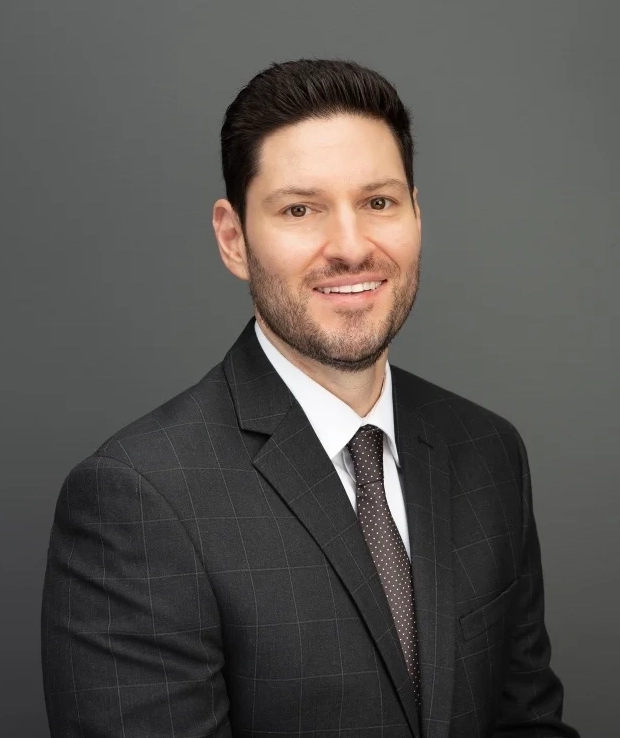
Faud Haghighi, Esq.
Founder & Lead Trial Attorney
An Orange County trial attorney representing people injured by someone else's negligence — in car and truck crashes, slip-and-falls, premises accidents, and other serious-injury cases. Faud builds each case with the right medical and liability experts, preserves the evidence early, and prepares every file for trial — and you work directly with him, start to finish.
CA State Bar since 2012 · Aliso Viejo & Tustin
Free Consultation Read full bio ›Personal Injury Services
Contact Our Legal Team
Speak directly with an experienced attorney at the Law Offices of Faud Haghighi. We're here to help you understand your rights and explore your legal options.
- (949) 313-7656
- info@fhaghighilaw.com
- 120 Vantis, Ste. 300
Aliso Viejo, CA 92656 - 1352 Irvine Blvd., Ste. 204
Tustin, CA 92780
Common Questions
Orange County Premises Liability FAQs
A premises liability claim arises when someone is injured by a dangerous or unsafe condition on property owned, managed, or controlled by another party. It includes slip and fall accidents, trip and fall hazards, unsafe stairs, poor lighting, broken sidewalks, falling objects, and other conditions that should have been repaired or properly warned against.
No. A slip and fall is one type of premises liability claim. Premises liability is broader and also covers trip and fall accidents, stairway injuries, parking lot hazards, inadequate lighting, negligent security, falling objects, and other unsafe property conditions. See our slip and fall page for more on those claims.
Possibly, yes. An owner can still be liable if the dangerous condition existed long enough that it should have been found through reasonable inspection and maintenance. This is called constructive notice, and it’s a central issue in many premises liability cases.
A warning sign doesn’t automatically eliminate liability. In some cases a hazard should have been repaired or blocked off rather than just marked, and a sign that was hard to see may not be adequate. What matters is whether the property was reasonably safe under the circumstances.
Yes. California follows a pure comparative fault rule, so your compensation is reduced by your percentage of fault, but you can still recover damages. Insurers often overstate a victim’s fault, which is why investigation and documentation matter.
It depends on who controlled and maintained the area where the injury happened. Potentially liable parties include property owners, property management companies, landlords, commercial tenants, maintenance and security contractors, homeowners’ associations, and government entities.
Often, yes. Landlords must keep common areas such as stairways, walkways, parking areas, and pools reasonably safe, and can be liable for dangerous conditions they knew about and had the ability to fix. Report hazards in writing and keep a copy.
Sometimes. Under California law, an owner’s duty to provide security depends on how foreseeable the crime was, and costly measures such as guards usually require evidence of prior similar incidents. Broken locks, gates, or lighting can also support a claim. See our page on inadequate lighting and security.
Under Civil Code §3342, a dog’s owner is responsible for a bite that happens in a public place or where the victim was lawfully on private property, even if the dog had never bitten anyone before. A landlord may also be liable in some cases if they knew about a dangerous dog and could have removed it.
Most claims must be filed within two years of the injury under California Code of Civil Procedure §335.1. Claims against public or government property are different: you generally must file a written government claim within six months (Gov. Code §911.2), so early evaluation is critical.
You may still have options. Other parties, such as a property manager, tenant, or maintenance contractor, may share responsibility and carry coverage. An attorney can identify every liable party and insurance source.
Clear-liability claims can resolve in a few months, while disputed or serious-injury cases often take a year or more. Cases are often stronger when not rushed, because the full extent of an injury becomes clear over time.
No. Many resolve through settlement, but strong cases are prepared as if they may go to trial. Insurers take a claim more seriously when it’s thoroughly documented and ready for litigation.
Nothing up front. The Law Offices of Faud Haghighi works on a contingency fee, so you pay no attorney’s fee unless we recover compensation for you. The consultation is free, so there’s no financial risk in finding out whether you have a case. If there is no recovery, you owe no attorney fee, but you may still be responsible for case costs, as explained in your fee agreement.
Client Reviews
What Our Clients Say
 Posted on Google

 Angelica Mejia
Trustindex verifies that the original source of the review is Google.
I had the best experience working with Mr. Haghighi. He always demonstrated a high level of professionalism and expertise while handing my case. I always felt very comfortable when communicating with him and I knew that I could trust him 100%. I highly recommend Mr. Haghighi for his knowledge, exceptional service, honesty, and dedication.Posted on Google jess francoI am writing to highly recommend Faud Haghighi for his outstanding professionalism, legal knowledge, and unwavering support. Throughout my experience working with him, Faud Haghighi consistently demonstrated a high level of competence, integrity, and dedication to his clients. Faud Haghighi is exceptionally knowledgeable in his field and took the time to clearly explain legal processes, options, and potential outcomes in a way that was easy to understand. His attention to detail and strategic approach provided confidence at every stage of the matter. He was always well-prepared, responsive, and thorough, ensuring that no question or concern went unaddressed. Beyond his technical expertise, Faud Haghighi stands out for his professionalism and supportive demeanor. He was approachable, patient, and genuinely invested in achieving the best possible outcome. His calm and reassuring presence made what could have been a stressful situation far more manageable. I would not hesitate to recommend Faud Haghighi to anyone seeking a skilled, reliable, and compassionate attorney. He is a true professional and an asset to the legal community.Posted on Google
 sara ezatiGreat experience working with this office. Very professional, responsive, and easy to work with. I truly appreciate all their help and would highly recommend them.Posted on Google
 Silvia FavelaI cannot recommend Faud highly enough. He assisted us after my son was stuck by an unlicensed driver in an unregistered and uninsured vehicle while riding his bike. This was an incredibly complex and stressful situation, but Faud’s professionalism and expertise were evident from day one. He handled all the difficult communication with my insurance company, ensuring my son was protected and that we weren’t taken advantage of. If you need a dedicated attorney who truly knows how to navigate the tough cases, Faud is the one to call.

Free Case Evaluation
Tell Us What Happened
Phone
(949) 313-7656
info@fhaghighilaw.com
Aliso Viejo Office
120 Vantis, Ste. 300, Aliso Viejo, CA 92656
Tustin Office
1352 Irvine Blvd #204, Tustin, CA 92780
Get Your Free Case Review
Submitting this form does not create an attorney-client relationship. Please do not include confidential or time-sensitive information.