What Is a Dangerous Condition of Public Property?
A dangerous condition of public property exists when a public space poses an unreasonable risk of injury to people using it in a foreseeable way. In simple terms, it means the property is not safe for normal use — and that unsafe condition leads to someone getting hurt.
Public spaces are supposed to be safe. Sidewalks, parks, government buildings, and public walkways exist for everyday use, and most people reasonably assume they are properly maintained. Unfortunately, dangerous conditions on public property are more common than many realize — and when they cause serious injuries, the consequences can be life-changing.
If you were injured due to an unsafe condition of public property in Orange County, you may have the right to pursue compensation. However, claims involving cities, counties, and other government entities are far more complex than ordinary premises liability cases and are subject to strict, shortened deadlines under California law.
At Law Offices of Faud Haghighi, we represent individuals injured by dangerous conditions on public property throughout Orange County as part of our broader personal injury practice. Our role is to help you understand your rights, act quickly to preserve evidence, and pursue accountability when public entities fail to maintain safe environments.
Public property includes locations owned or controlled by government entities, such as cities, counties, school districts, or transportation authorities. These cases differ from private property injury claims because public entities are governed by special rules that affect when and how claims must be filed. Public property cases are often more complex because:
- Government agencies have specific notice requirements
- Shortened claim deadlines apply
- Multiple departments or entities may be involved
- Evidence can disappear quickly if not preserved early
Understanding these distinctions early can make the difference between a valid claim and one that is permanently barred.
What Are the Most Common Dangerous Conditions of Public Property?
Unsafe public property conditions often develop slowly and go unaddressed for long periods. Below are some of the most common hazards that lead to serious injuries in Orange County.

Broken or Uneven Sidewalks
Raised slabs, sunken concrete, or abrupt elevation changes create tripping hazards — especially in high-traffic pedestrian areas and these causes injuries due to uneven surfaces.
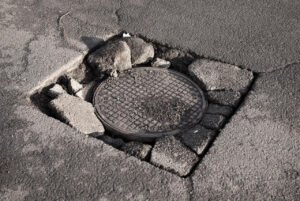
Cracked Pavement and Potholes
Deteriorated pavement can cause sudden falls or vehicle-related pedestrian injuries, particularly near crosswalks or parking areas.
Poorly Maintained Walkways and Ramps
Worn surfaces, loose materials, or improper slope design can make walkways dangerous for all users, including those with mobility challenges.
Missing Handrails or Guardrails
Handrails are critical safety features on stairs, ramps, and elevated walkways. Their absence significantly increases fall risk.
Inadequate Lighting in Public Areas
Poor lighting causes injuries because it reduces visibility, making hazards difficult to detect — especially at night or in enclosed public spaces.
Unsafe Stairways
Uneven steps, broken edges, or inconsistent stair heights can easily lead to serious falls.
Drainage Issues and Standing Water
Improper drainage can lead to slick surfaces, algae buildup, or pooling water that creates slip hazards.
Where Do Public Property Injuries Commonly Occur?
Dangerous conditions on public property can appear almost anywhere people are invited to go. Common locations include:
Sidewalks and Pedestrian Walkways
City sidewalks, crosswalks, and shared pedestrian zones are among the most frequent sites of injury claims due to Sidewalks and walkaways.
Parks and Recreational Areas
Public parks, trails, playgrounds, and sports facilities often involve uneven terrain, poor maintenance, or aging infrastructure.
Government Buildings
Courthouses, city halls, libraries, and other public buildings must meet safety standards for visitors and employees alike.
Public Parking Lots and Structures
Cracked pavement, poor lighting, and missing safety barriers are common in municipal parking facilities.
Public Transportation Areas
Bus stops, train platforms, stations, and transit walkways frequently involve high foot traffic and increased injury risk.
School and Municipal Facilities
Schools, community centers, and other public facilities are required to maintain safe access for visitors and staff.
When Can a City or Government Entity Be Held Liable?
A public entity can be held liable for a dangerous condition of its property if it knew or should have known about the hazard and failed to fix it or warn of it within a reasonable time. Public entities are not automatically responsible for every injury that occurs on their property — liability depends on notice, foreseeability, and whether reasonable steps were taken. Key factors include:
Duty to Maintain Public Property
Government entities have a responsibility to keep public spaces reasonably safe for their intended use.
Actual vs. Constructive Notice
A city may be liable if it knew about the hazard or if the condition existed long enough that it should have been discovered through reasonable inspections.
Reasonable Time to Repair
Even after discovering a hazard, public entities are allowed a reasonable period to fix the issue. What qualifies as “reasonable” depends on the circumstances.
Foreseeability of Harm
If it was foreseeable that people could be injured by the condition, liability is more likely to exist.
These cases require careful analysis of facts — not assumptions — making early legal evaluation essential.
How Is a Dangerous Condition Claim Proven?
Strong public property claims rely on detailed evidence gathered early. Important forms of proof may include:
- Photographs and measurements documenting the hazard
- Maintenance and inspection records from the responsible agency
- Prior complaints or incident history involving the same location
- Witness statements confirming how the injury occurred
- Expert analysis when design or engineering issues are involved
Because public entities often repair hazards quickly after an injury, acting promptly can preserve critical evidence that might otherwise be lost.
What Injuries Are Commonly Caused by Unsafe Public Property?
Falls and accidents on public property often result in serious injuries, including:
- Broken bones and fractures
- Head injuries and concussions
- Back, neck, and spinal injuries
- Soft tissue damage to muscles and ligaments
- Long-term mobility limitations or chronic pain
These injuries can disrupt work, daily life, and long-term health — making accountability and compensation especially important.
What Are the Deadlines for a Public Property Claim in California?
Claims against a public entity generally require a written government claim within six months of the injury under Government Code § 911.2 — far shorter than the two-year deadline under CCP § 335.1 that applies to most personal injury claims against private parties. Missing this deadline can permanently bar your claim, regardless of how serious the injury.
Early legal review allows:
- Proper identification of the responsible public entity
- Timely filing of the required government claim within the six-month window
- Preservation of evidence before it disappears
Understanding these timelines early protects your rights and keeps your case viable.
Why Choose the Law Offices of Faud Haghighi
Public property injury cases demand precision, experience, and early action. Our firm focuses on strategic case development from day one.
Experience with Government-Related Claims
We understand how public entities operate and how liability claims against them are evaluated.
Early Evidence Preservation
We move quickly to document hazardous conditions and secure key records.
Understanding Notice Requirements
Our approach ensures procedural compliance while building strong liability arguments.
Strategic Case Preparation
Each case is prepared with settlement and litigation readiness in mind from the outset. Every case is different, and past results do not guarantee future outcomes.
Serving Clients Throughout Orange County
We represent clients injured by dangerous conditions on public property across Orange County, including:
- Santa Ana
- Irvine
- Anaheim
- Mission Viejo
- Lake Forest
- Tustin
- And surrounding communities
If your injury occurred anywhere in Orange County, timely legal guidance can make a critical difference.
Hurt by a dangerous condition of public property in Orange County? The six-month government-claim deadline is strict and evidence disappears fast, so the sooner we start, the stronger your case will be. Call (949) 313-7656 or request a free consultation to talk about what happened

Faud Haghighi, Esq.
Founder & Lead Trial Attorney
An Orange County trial attorney representing people injured by someone else's negligence — in car and truck crashes, slip-and-falls, premises accidents, and other serious-injury cases. Faud builds each case with the right medical and liability experts, preserves the evidence early, and prepares every file for trial — and you work directly with him, start to finish.
CA State Bar since 2012 · Aliso Viejo & Tustin
Free Consultation Read full bio ›


