Last updated: October 2026 · Reviewed by Faud Haghighi, Esq., Founder & Lead Trial Attorney
How Can an Orange County Pedestrian Accident Lawyer Help?
An Orange County pedestrian accident lawyer investigates how the collision happened, shows what the driver could and should have seen, identifies every party and insurance policy that may be responsible, and pursues compensation for your medical care, lost income, and pain and suffering.
When a car hits a person on foot, even a low-speed impact can cause fractures or a head injury, and the case often turns on a few seconds of disputed facts. The Law Offices of Faud Haghighi represents injured pedestrians throughout Orange County and Southern California from offices in Aliso Viejo and Tustin. Faud Haghighi handles each case personally, so you work directly with the attorney preparing your case. Our recoveries include $250,000 for a pedestrian struck by a vehicle in Lake Forest; that result depended on the facts of that case, and results will differ if based on different facts.
| Pedestrian claims at a glance | What it means for you |
|---|---|
| Shared fault | You can generally still recover if you were partly at fault; your compensation is reduced by your share. |
| Insurance | The driver’s policy may not be the only coverage. Your own or a household member’s auto policy can protect you on foot. |
| Evidence | Camera systems often record over old footage and witnesses become hard to find, so early action matters. |
| Public roads | If a public agency shares responsibility, a written claim is generally due within six months. |
| Fees | Free, confidential consultation. No attorney fee unless we recover for you. |
What Should You Do Right After Being Hit by a Car?
Get medical care first, report the collision, and preserve what you can before the scene changes. If you are able, or someone can help you:
- Call 911 for medical help and to report the collision to the police or CHP.
- Get the driver’s name, license, plate number, and insurance, and witnesses’ names and phone numbers.
- Photograph the crosswalk, signals, lighting, the vehicle, and your injuries, and note any cameras facing the street.
- Keep your shoes and clothing as they are; damage patterns can help show how the impact happened.
- If the driver left the scene, tell the police right away. An uninsured motorist claim requires a police or CHP report within 24 hours (explained below).
- Don’t give a recorded statement to the driver’s insurer before getting advice.
What If You Felt Fine Right After the Accident?
Adrenaline can mask pain, and symptoms of injuries such as concussions and soft-tissue injuries may not appear or seem serious for hours or days. Get a medical evaluation promptly and tell the provider exactly how you were hit. Insurers often point to a delay in treatment to argue the injury was minor or caused by something else; read more about why gaps in treatment can hurt a claim.
How Is Fault Determined When a Car Hits a Pedestrian?
The driver is often primarily at fault, but liability depends on how the collision happened. California law generally requires drivers to yield to pedestrians in crosswalks and to use due care around anyone on foot, while pedestrians also have duties that can affect comparative fault.
| Situation | What California law generally requires | Law |
|---|---|---|
| Pedestrian in a marked crosswalk, or an unmarked crosswalk at an intersection | The driver must yield, and slow down or take other action as needed to keep the pedestrian safe | Veh. Code §21950 |
| Driver turning right on a red light | The driver must stop, then yield to pedestrians lawfully in the adjacent crosswalk | Veh. Code §21453(b) |
| A car ahead has stopped at a crosswalk for a pedestrian | Drivers approaching from behind must not pass it | Veh. Code §21951 |
| Signal flashing an upraised hand or DON’T WALK with a countdown | The pedestrian may start crossing but must finish before the steady signal appears | Veh. Code §21456 |
| Pedestrian crossing outside a crosswalk | The pedestrian must yield to vehicles close enough to be an immediate hazard; the driver must still use due care | Veh. Code §21954 |
| Driver crossing a sidewalk to enter or leave a driveway or parking lot | The driver must yield to pedestrians on the sidewalk | Veh. Code §21952 |
Fault is rarely decided by one rule. We look at what the driver could see, the vehicle’s speed, what the signals showed, where you were and which way you were walking, and whether anything blocked either person’s view. The officer’s opinion in the police report matters, but it does not decide who is legally at fault in a civil case.
What Evidence Matters Most in a Pedestrian Accident?
The most important evidence shows where you were, what the driver could see, and how fast the vehicle was moving, and much of it disappears quickly. When we investigate a pedestrian collision, we focus on the seconds before the impact, not only the impact itself.
| Evidence | What it can show |
|---|---|
| Business, doorbell, and dashcam video | The signal phase, the driver’s path and speed, and where you were walking; it must be requested before it is recorded over |
| Collision report and 911 recordings | Statements made right after the crash, measurements, and the scene diagram |
| Witnesses | Whether you were in the crosswalk and whether the driver was distracted |
| Signal timing from the agency that runs the signal | How long the walk and countdown phases last, compared with video and witness accounts |
| Vehicle damage and event data recorder (“black box”) | The point of impact, speed, and braking. The recorder’s data generally can be downloaded only with the owner’s consent or a court order (Veh. Code §9951). |
| The scene: skid marks, final positions, lighting, and parked vehicles near the crossing | Whether the driver braked, and whether visibility was limited for either person |
| The driver’s phone records | Texting or calls at the time of the crash; usually obtained after a lawsuit is filed |
| Your shoes, clothing, and injuries | The height and direction of the impact, and what the driver could actually see at night |
When the facts are disputed, we work with accident reconstruction and medical experts; read more about why expert witnesses matter.
Can a Pedestrian Be Partly at Fault?
Yes, but under California’s pure comparative negligence rule, sharing fault generally reduces your compensation by your percentage of fault rather than barring it. A pedestrian with $90,000 in losses who is found 20% at fault still recovers $72,000. Insurers often argue that a pedestrian crossed mid-block, started against the signal, wore dark clothing at night, or was looking at a phone. The driver’s side generally has to prove those arguments, and the driver’s own duty to watch for pedestrians remains.
Does Crossing Outside a Crosswalk Automatically Make You at Fault?
No. A pedestrian outside a crosswalk must yield to vehicles close enough to be an immediate hazard, but drivers must still use due care for any pedestrian on the roadway (Veh. Code §21954). Since the Freedom to Walk Act took effect on January 1, 2023, police generally may not stop a pedestrian for crossing outside a crosswalk unless a reasonably careful person would realize there is an immediate danger of a collision (Veh. Code §21955). In the civil case, the question is still what each person reasonably should have done.
What Are the Most Common Pedestrian Collision Scenarios?
- Turning drivers: a right-turning driver looks left for a gap and not right toward a pedestrian stepping off the curb, or a left-turning driver watches oncoming traffic and turns into the crosswalk.
- Passing a stopped car: one lane stops for a pedestrian, and a driver in the next lane passes and strikes them.
- Backing vehicles: a driver backs out of a driveway or parking space; on a street, a driver may not back up until it can be done with reasonable safety (Veh. Code §22106).
- Parking lots: drivers hunting for spaces or cutting across aisles; poor lighting or layout can also involve the property owner (see parking lot and parking structure injuries).
- Working drivers: a delivery, company, or Uber or Lyft driver can bring commercial coverage into the case, and large trucks add blind spots and longer stopping distances (see truck accidents).
- Drivers who flee or are impaired: a hit-and-run may shift the claim to your own coverage, and a drunk or drugged driver may also face punitive damages.
Where Do Pedestrian Crashes Happen in Orange County?
Pedestrian crashes tend to happen where heavy traffic meets heavy foot traffic. In Orange County, that usually means:
- Downtown and commercial corridors, such as downtown Santa Ana and wide streets like Harbor Boulevard, Bristol Street, and Beach Boulevard, where people cross several lanes of fast traffic.
- Visitor areas, such as the Anaheim Resort area, where people unfamiliar with the streets walk between hotels, parking, and attractions.
- Pacific Coast Highway in Huntington Beach and Newport Beach, where beach traffic, parking, and crossings mix.
- Wide suburban arterials in Irvine and South County cities like Lake Forest, especially at intersection crossings and shopping-center entrances.
- School zones and transit stops, where children walk to school and riders walk to OCTA buses and Metrolink stations.
Visibility is often the issue. Since January 1, 2024, California generally prohibits stopping or parking within 20 feet of the approach side of a crosswalk, or 15 feet where there is a curb extension (Veh. Code §22500(n)), so a vehicle parked there can be part of the evidence.

Who Can Be Responsible for a Pedestrian Accident?
The driver who hit you is the most common defendant, but depending on the facts, others can share responsibility:
- The driver’s employer, if the driver was working at the time.
- The vehicle’s owner, if someone else was driving with permission; this liability is generally capped at $15,000 per injured person unless another rule applies, such as the driver working for the owner (Veh. Code §17151).
- A city, the county, or a state agency, if a dangerous condition of public property, such as a broken signal or missing lighting, contributed (Gov. Code §835). Public agencies have special defenses and deadlines; see dangerous conditions of public property.
- A property owner or business, for a parking lot or driveway crash where lighting, layout, or signage contributed; see premises liability.
- Another driver, such as one whose crash pushed a vehicle into a pedestrian.
Who Pays When a Pedestrian Is Hit by a Car?
The at-fault driver’s liability insurance usually pays first, but it is often not enough, and other policies may apply.
- The driver’s liability coverage: at least $30,000 per person on California policies issued or renewed since January 1, 2025 (Veh. Code §16056), often far less than a serious pedestrian injury is worth.
- Your own or a household member’s UM/UIM coverage, which can protect you on foot.
- MedPay on your own auto policy, if you bought it, for medical bills regardless of fault.
- Your health insurance, which may seek repayment from a settlement; some providers instead treat on a medical lien.
- Employer, commercial, or rideshare coverage, if the driver was working or logged into a rideshare app (Pub. Util. Code §5433).
What If the Driver Had No Insurance or Drove Away?
Your own uninsured motorist (UM) coverage may pay. California auto policies include it unless it was waived in writing, and it can apply to you as a pedestrian. If the driver was never identified, a UM claim generally requires physical contact with the vehicle, a police or CHP report within 24 hours, and a sworn statement to your insurer within 30 days (Ins. Code §11580.2). If the driver had too little insurance, underinsured motorist coverage may pay after the driver’s limits are paid, reduced by what that policy paid. Learn more about uninsured and underinsured motorist claims.
What Injuries and Damages Can You Claim?
Pedestrian injuries are often severe: leg and pelvic fractures, knee injuries, head and spinal injuries, and deep road-rash wounds. Compensation can include past and future medical care, lost income and earning capacity, pain and suffering, scarring, permanent limitations, and damaged property such as a phone or glasses. Head injuries can be easy to miss at first; see brain injury claims and catastrophic injury claims.
What Is a Pedestrian Accident Case Worth?
There is no reliable “average pedestrian accident settlement” that can tell you what your case is worth. These are the factors that usually move value:
| Can increase value | Can complicate or reduce recovery |
|---|---|
| Surgery or a permanent injury | Disputed or shared fault |
| Long-term or future treatment | Gaps or delays in treatment |
| Substantial lost income or earning capacity | Pre-existing conditions in the same part of the body |
| Scarring, or a brain or spinal injury | Limited insurance coverage |
| Clear liability evidence, such as video | Unclear, lost, or late-reported evidence |
Past medical expenses are generally measured by what was actually paid or owed, not always the amount billed. Read more about what affects the value of a personal injury case.
What If a Child Was Hit by a Car?
A parent or guardian generally brings the claim, and a court must approve any settlement. Several rules differ from adult cases:
- A child’s conduct is generally judged by what a reasonably careful child of the same age, intelligence, and experience would do, not by an adult standard.
- A parent is usually appointed guardian ad litem to bring the lawsuit (Code Civ. Proc. §372), and a settlement is valid only after the superior court approves it (Prob. Code §3500), which also decides how the money is protected.
- The child’s two-year deadline generally does not begin until age 18, but that extension does not apply to the six-month claim against a school district, city, or other public agency, and a parent’s own claim for the child’s medical bills may not get the same extension.
- Young children may not describe symptoms well, so prompt medical evaluation and follow-up matter.
How Long Do You Have to File a Pedestrian Accident Claim?
Generally two years from the injury to file a lawsuit, but only six months to present a written claim if a public agency is involved.
| Situation | Deadline | Law |
|---|---|---|
| Injury lawsuit against the driver or another private party | 2 years from the injury | CCP §335.1 |
| Claim against a city, the county, a school district, or another public agency | Written claim within 6 months | Gov. Code §911.2 |
| Hit-and-run, uninsured motorist claim | Police or CHP report within 24 hours; sworn statement to your insurer within 30 days; sue, settle, or demand arbitration within 2 years | Ins. Code §11580.2 |
| Injured child, private defendant | The 2 years generally do not run until age 18 | CCP §352 |
| Fatal pedestrian accident | Family’s claim generally 2 years from the death | Wrongful death claims |
This page explains California law in general terms as of October 2026. Laws change and exceptions apply, so it is not legal advice about your situation.
How Does Faud Haghighi Prepare a Pedestrian Accident Case?
Insurers push hard to blame the person on foot. Faud Haghighi has practiced law in California since 2012 and has handled hundreds of cases, including pedestrian and bicycle accidents and claims against cities for dangerous conditions of public property. He handles each case personally, preserves the evidence early, and prepares each case as if it will go to trial, which shows the insurer how the case would look to a jury. If the insurer won’t pay fair value, we file in the Orange County Superior Court.
We represent injured pedestrians throughout Orange County and Southern California, including Costa Mesa, Tustin, and the cities above, as part of our Orange County personal injury practice. If you were riding rather than walking, see bicycle accident claims.
Hit by a car while walking? Call (949) 313-7656 or request a free consultation. There is no attorney fee unless we recover for you.
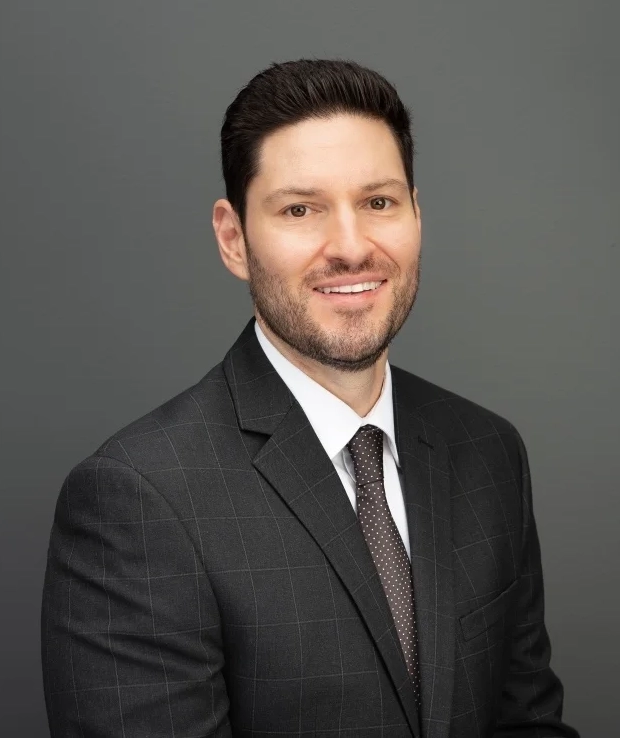
Faud Haghighi, Esq.
Founder & Lead Trial Attorney
An Orange County trial attorney representing people injured by someone else's negligence — in car and truck crashes, slip-and-falls, premises accidents, and other serious-injury cases. Faud builds each case with the right medical and liability experts, preserves the evidence early, and prepares every file for trial — and you work directly with him, start to finish.
CA State Bar since 2012 · Aliso Viejo & Tustin
Free Consultation Read full bio ›


