Last updated: October 2026 · Reviewed by Faud Haghighi, Esq., Founder & Lead Trial Attorney
How Can an Orange County Motorcycle Accident Lawyer Help?
An Orange County motorcycle accident lawyer counters the bias riders face, proves the driver who turned, merged, or pulled out in front of you caused the crash, and pursues full compensation for injuries that are often severe and long-lasting.
Many drivers and adjusters assume a motorcyclist was speeding or weaving, even when the evidence says otherwise. The Law Offices of Faud Haghighi represents injured motorcyclists and passengers throughout Orange County and Southern California from offices in Aliso Viejo and Tustin. Faud Haghighi’s practice centers on difficult, disputed-liability cases, and he handles each case personally, so you work directly with the attorney preparing your case.
| Motorcycle claims at a glance | What it means for you |
|---|---|
| Rider bias | Insurers often start by blaming the rider; evidence gathered early is the answer. |
| Lane splitting | It is not prohibited in California and does not make a rider automatically at fault. |
| Helmets | Required for all riders, but riding without one does not bar a claim. |
| Your bike’s insurance | If the motorcycle was uninsured, pain and suffering damages are generally barred (Prop 213). |
| Low policy limits | Your own uninsured/underinsured motorist coverage often matters in serious cases. |
| Fees | Free, confidential consultation. No attorney fee unless we recover for you. |
What Should You Do After a Motorcycle Crash?
Get medical care, get the crash on record, and keep the bike and gear exactly as they are.
- Get medical attention right away; adrenaline can hide fractures, internal injuries, and head trauma.
- Call the police or CHP so there is a collision report, and ask for the report number.
- Collect the driver’s information and witnesses’ names and numbers before they leave.
- Photograph the bike, the other vehicle, the road surface, and your injuries; gravel, oil, or potholes can matter.
- Keep your helmet, jacket, and gear. Scuffs and damage help show how you went down.
- Save helmet-cam or dashcam footage and note any businesses with cameras nearby.
- Don’t give a recorded statement to the other driver’s insurer before getting advice.
Why Are Motorcycle Crash Cases Different?
Three things set these cases apart. First, the driver’s most common explanation is “I never saw the motorcycle,” which often means the driver didn’t look carefully enough and generally is not a defense. Second, insurers often estimate a rider’s speed from assumptions about motorcycles rather than from evidence. Third, riders have no frame or airbags around them, so injuries such as leg and pelvic fractures, road rash and skin grafts, spinal injuries, and brain injuries are common, and the losses often exceed the at-fault driver’s insurance. Each of these shapes how we build the case.
How Is Fault Proven When a Driver Hits a Motorcyclist?
Fault goes to whoever failed to use reasonable care, and most car-versus-motorcycle crashes follow a few patterns with specific rules of the road behind them.
| Crash pattern | What usually went wrong | Rule often at issue |
|---|---|---|
| Car turns left in front of an oncoming motorcycle | The driver failed to yield to oncoming traffic close enough to be a hazard | Veh. Code §21801 |
| Driver changes lanes into a rider | The driver moved over without checking mirrors and blind spots or signaling | Veh. Code §22107 |
| Rear-end crash into a stopped or slowing motorcycle | The following driver was distracted or following too closely | Veh. Code §21703 |
| Driver pulls out from a driveway, parking lot, or alley | The driver didn’t yield to approaching traffic | Veh. Code §21804 |
| Crash on a curve or in poor conditions | Speed unsafe for the conditions, by the driver or the rider | Veh. Code §22350 |
California’s pure comparative negligence rule means a rider who made a mistake can still recover. A rider with $200,000 in losses who is found 25% at fault, for example for taking a curve a little too fast, still recovers $150,000.
What Evidence Matters in a Motorcycle Case?
Motorcycle crashes leave a physical record on the road, the bike, and the rider’s gear, and it fades quickly.
| Evidence | What it can show |
|---|---|
| Gouges, scrapes, and skid marks on the pavement | Where the bike went down, the rider’s path, and whether the rider braked |
| The motorcycle’s damage and where it came to rest | The point and angle of impact |
| Helmet, jacket, and gear | How the rider hit the ground or the vehicle |
| Helmet-cam, dashcam, and nearby surveillance video | The driver’s turn or lane change, and the rider’s actual speed and position |
| The other vehicle’s damage | Whether it turned or moved into the rider’s path |
| Sight lines and the road surface | What the driver could have seen, and any gravel, potholes, or missing signs |
| Collision report, witnesses, and 911 recordings | Statements made before anyone had time to rethink them |
When fault or speed is disputed, we work with reconstruction experts who can show speed, sight lines, and the point of impact; read more about why expert witnesses matter.
What If the Insurer Says You Were Speeding or Lane Splitting?
Make the insurer prove it. Speed estimates are often based on assumptions rather than measurements, and even if a rider was over the limit, the question is whether that speed actually caused the crash or would have changed the outcome. If it did, comparative fault reduces the recovery rather than eliminating it.
Is Lane Splitting Legal in California?
California law defines lane splitting, riding a two-wheeled motorcycle between rows of stopped or moving vehicles in the same lane, and lets the California Highway Patrol publish safety guidelines for it (Veh. Code §21658.1). No statute prohibits it. Lane splitting does not make a rider automatically at fault; the question is whether the rider and the driver each acted reasonably under the conditions.
What If I Wasn’t Wearing a Helmet?
California requires every motorcycle rider and passenger to wear a helmet that meets the required safety standards (Veh. Code §27803). Riding without one does not cause a crash and does not bar a claim, but the insurer may argue it made a head injury worse. That argument generally affects only the head-injury damages, not a broken leg or other injuries a helmet would not have prevented.
Where Do Motorcycle Crashes Happen in Orange County?
Orange County’s motorcycle crashes often happen on scenic two-lane roads with sharp curves, and on busy freeways and arterials where drivers misjudge a bike’s speed or don’t see it.
- Ortega Highway (State Route 74), a winding two-lane mountain road from San Juan Capistrano into Riverside County, popular with riders, with tight curves and long stretches without a shoulder.
- Santiago Canyon Road and the other foothill canyon roads, where gravel, blind curves, and drivers unfamiliar with the roads create hazards.
- Pacific Coast Highway, where riders share the road with beach traffic and cars pulling in and out of parking.
- The I-5, I-405, SR-55, and SR-91, where lane changes in heavy traffic and lane splitting between slow-moving cars lead to sideswipes and rear-end crashes; see our guide to accidents on the 5 and 405.
Loose gravel, potholes, missing signs, and poorly designed curves on public roads can make a public agency responsible, and a written claim is generally due within six months. Learn more about dangerous conditions of public property.

Who Pays After a Motorcycle Accident?
The at-fault driver’s liability insurance pays first, but serious motorcycle injuries often exceed it, so other coverage matters.
- The driver’s liability coverage, as low as $30,000 per person on California policies issued or renewed since January 1, 2025 (Veh. Code §16056).
- Uninsured/underinsured motorist coverage on your motorcycle policy, which California requires insurers to include unless you waived it in writing (Ins. Code §11580.2).
- Medical payments coverage, if your policy includes it.
- A public agency or its contractor, if road conditions caused or contributed to the crash.
- A manufacturer, if a defective part such as brakes or tires failed; see defective product claims.
One important limit: under Proposition 213, an injured vehicle owner or operator who was uninsured at the time of the crash generally cannot recover pain and suffering damages, though medical bills and lost wages remain recoverable (Civ. Code §3333.4). If the other driver fled, see hit-and-run claims; if that driver was drunk, see DUI crash claims.
Can a Motorcycle Passenger Make a Claim?
Yes. A passenger can generally claim against whichever driver caused the crash, including the rider they were with, and may also be protected by uninsured motorist coverage on the motorcycle’s policy or a household member’s auto policy.
What Affects the Value of a Motorcycle Accident Claim?
A claim can include medical treatment and future care, lost income and earning capacity, pain and suffering, scarring and disfigurement, and the cost of the bike and gear. There is no reliable “average motorcycle accident settlement”; these factors usually move value:
| Can increase value | Can complicate or reduce recovery |
|---|---|
| Surgery, skin grafts, or a permanent injury | Speed or lane-position arguments against the rider |
| Brain or spinal injury, or amputation | Riding an uninsured motorcycle (Prop 213) |
| Substantial lost income or earning capacity | Low policy limits and no UM/UIM coverage |
| Clear evidence, such as video | Gaps or delays in treatment |
For the most serious injuries, see spinal cord injury claims, brain injury claims, and catastrophic injury claims, and read more about what affects the value of a personal injury case.
What Are the Deadlines for a Motorcycle Accident Claim?
Generally two years from the crash to file an injury lawsuit, but only six months for a written claim if a public agency is responsible.
| Situation | Deadline | Law |
|---|---|---|
| Injury lawsuit against the at-fault driver | 2 years from the crash | CCP §335.1 |
| Motorcycle and gear damage only | 3 years | CCP §338 |
| Claim against a public agency (road condition, government vehicle) | Written claim within 6 months | Gov. Code §911.2 |
| Uninsured/underinsured motorist claim | Sue, settle, or demand arbitration within 2 years | Ins. Code §11580.2(i) |
| Fatal crash: family’s wrongful death claim | 2 years from the death | Wrongful death claims |
This page explains California law in general terms as of October 2026. Laws change and exceptions apply, so it is not legal advice about your situation.
How Does Faud Haghighi Answer the Insurer’s Arguments Against Riders?
Motorcycle cases are often contested from the first phone call. Faud Haghighi has practiced law in California since 2012, and his practice centers on disputed-liability cases like these. He handles each case personally, gathers the scene evidence, video, and witness accounts early, tests the insurer’s speed and lane-position claims against the physical evidence, and prepares each case as if it will go to trial. When an insurer refuses a fair offer, we take the case to the Orange County Superior Court.
We represent riders throughout Orange County and Southern California, including Mission Viejo, Lake Forest, Laguna Hills, Santa Ana, Anaheim, and Tustin, as part of our Orange County personal injury practice. A crash with a semi or delivery truck raises different issues; see truck accident claims.
Hurt in a motorcycle crash? Call (949) 313-7656 or request a free consultation. There is no attorney fee unless we recover for you.
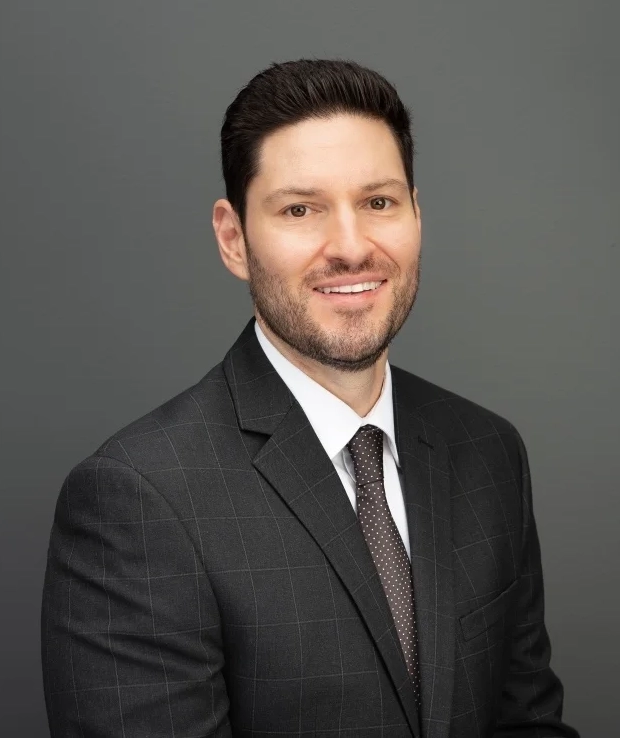
Faud Haghighi, Esq.
Founder & Lead Trial Attorney
An Orange County trial attorney representing people injured by someone else's negligence — in car and truck crashes, slip-and-falls, premises accidents, and other serious-injury cases. Faud builds each case with the right medical and liability experts, preserves the evidence early, and prepares every file for trial — and you work directly with him, start to finish.
CA State Bar since 2012 · Aliso Viejo & Tustin
Free Consultation Read full bio ›


