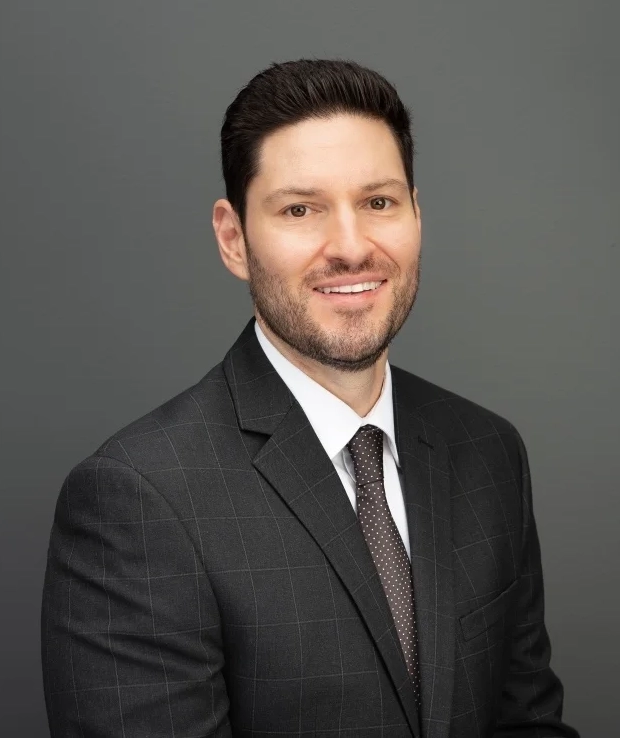
Last Updated: September 22, 2026 By Faud Haghighi, Esq. — Law Offices of Faud Haghighi | Orange County Personal Injury Attorney
Property owners and their insurance carriers rely on a predictable set of legal defenses designed to minimize their liability, deny knowledge of dangerous conditions, or shift full blame onto the injured person. Under California premises liability law, commercial property owners, landlords, and business operators owe a duty of ordinary care to maintain their properties in a reasonably safe condition. When an injury occurs, defense attorneys and insurance adjusters rarely concede fault voluntarily; instead, they immediately deploy established legal arguments to deny financial responsibility.
Successfully resolving a premises liability claim requires identifying and disproving these defenses before the insurance carrier uses them to undervalue your claim. By investigating the scene promptly, securing physical evidence, and conducting thorough cross-examinations, an experienced Orange County personal injury lawyer dismantles these arguments systematically.
As covered in our guide on how the discovery process builds your injury case, formal litigation tools allow us to obtain internal sweep logs, inspection records, and surveillance tapes that directly refute the property owner’s claims.
The “Trivial Defect” Defense
The trivial defect doctrine allows property owners to escape legal liability if they can prove that a sidewalk irregularity, walkway crack, or step variation was minor and posed no foreseeable risk of harm. Under established California precedent, property owners are not held liable for injuries resulting from minor or insignificant walkway defects that reasonable pedestrians are expected to navigate safely.
In municipal walkway and sidewalk and public walkway claims, defense counsel routinely points to the physical height of an uneven sidewalk slab—frequently asserting that any lip or ledge measuring three-quarters of an inch or less is trivial as a matter of law. However, California courts do not evaluate triviality based solely on tape-measure height. We overcome trivial defect claims by proving surrounding aggravating circumstances:
- Visual Obstructions: Overhanging shrubbery, deep shadows, or blinding sunlight that hid the height variation from view.
- Poor Illumination: Inadequate lighting and security that obscured walkway transitions at night.
- Debris and Camouflage: Fallen leaves, standing water, or uniform concrete coloring that blended the uneven ledge into surrounding pavement.
- Prior Incidents: Historical municipal records or prior complaints showing other pedestrians tripped over the exact same spot.
A defect that seems minor in an isolated daytime photograph can be unreasonably hazardous when these surrounding factors are present, making early scene documentation crucial in an uneven surface or trip and fall case.
The “Open and Obvious” Defense
Property owners raise the open and obvious doctrine to claim a hazard was so plainly visible that an attentive person should have seen and avoided it without warning. Insurers use this defense to argue that the property owner had no legal duty to warn visitors because the danger was readily apparent.
In California, an open and obvious condition does not automatically shield a property owner from liability. Under California Civil Jury Instructions (CACI 1004), if a property owner should foresee that a condition could cause harm—even if visible—they still owe a duty to repair the hazard or implement safety measures. In commercial settings like supermarkets or shopping centers, customers are expected to focus on elevated merchandise displays rather than scrutinize the floor for trip hazards. When an encounter with a hazard is foreseeable or unavoidable, property owners cannot rely on the open and obvious defense to avoid responsibility.
The “Lack of Notice” Defense
A property owner cannot be held liable under California premises liability law unless they had actual or constructive notice of the dangerous condition before the accident occurred. This is the central legal dispute in many slip and fall cases, where owners claim a liquid spill or structural defect occurred mere seconds before the fall.
To defeat a lack of notice defense, we establish proof through two evidentiary standards:
- Actual Notice: Showing that employees created the hazard directly (such as mopping without caution cones) or that management received prior reports of the danger before the incident.
- Constructive Notice: Proving that the hazard existed for a sufficient length of time that a reasonably careful owner conducting routine inspections would have discovered and corrected it.
We dismantle lack of notice arguments by reviewing electronic sweep logs, time-stamped surveillance footage, and shift schedules during discovery to demonstrate that property staff skipped required safety checks.
Comparative Fault and Blaming the Injured Person
Insurance adjusters frequently seek to lower payouts by arguing that the injured person contributed to their own fall through distraction, improper footwear, or careless walking. California applies a pure comparative negligence standard, meaning an injured person can still recover compensation even if they share partial blame, with their final recovery reduced by their assigned percentage of responsibility.
Common comparative fault allegations include:
- Claiming the injured person was distracted by their mobile device.
- Alleging footwear (such as high heels or open sandals) caused the slip.
- Asserting the plaintiff walked through a marked area or ignored verbal warnings.
- Arguing the claimant was moving too quickly for the environment.
We counter comparative negligence defenses by securing objective surveillance video, eyewitness statements, and footwear traction data to show that the property owner’s negligence was the primary cause of the injury.
“The Condition Wasn’t Dangerous” and Public Property Defenses
Defendants also argue that the property met standard building codes or did not create an unreasonable risk of harm. In commercial settings, defense lawyers often submit post-accident friction tests to argue the floor met safety thresholds.
When injuries occur on government property, additional legal barriers apply. Claims involving dangerous conditions on public property require proving under California Government Code § 835 that the condition created a substantial risk of injury when used with due care. Furthermore, public entity claims require filing a formal administrative claim within six months under the California Government Claims Act before pursuing a lawsuit in court.
How We Counter These Defenses
Overcoming aggressive premises liability defenses requires collecting concrete physical evidence immediately after the incident occurs. We build strong responses by taking targeted legal steps:
- Scene Preservation: Issuing formal spoliation letters to preserve surveillance video before recording loops overwrite footage.
- Physical Documentation: Gathering lighting meter readings, surface friction tests, and exact measurements before property owners alter the scene.
- Witness Interviews: Questioning employees and eyewitnesses before corporate defense teams shape their statements.
- Maintenance Audits: Subpoenaing cleaning schedules, sweep logs, and corporate safety policies during litigation.
Establishing an airtight evidentiary record prevents defense adjusters from dismissing valid injury claims, putting you in the best position to secure fair financial recovery.
Disclaimer: Every legal case involves distinct factual circumstances. Prior results, settlements, or court verdicts do not constitute a guarantee, warranty, or prediction regarding the outcome of your individual claim.
Speak With an Orange County Premises Liability Attorney
Is a property owner or insurance company blaming you for an injury on their premises? We understand California premises liability law, know how to defeat routine defense arguments, and protect your rights from day one. Call (949) 313-7656 or request a free consultation to discuss your legal options with an attorney.